
Pellet Grill vs Gas Grill in 2026: Which Should You Buy?
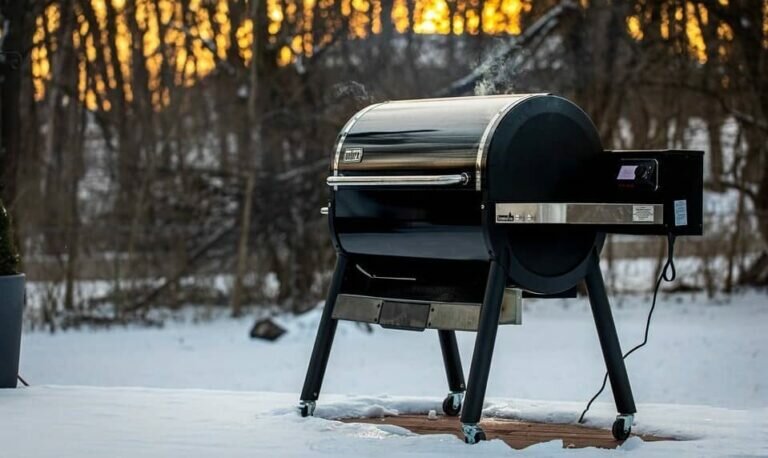
The pellet grill vs gas grill debate has shifted considerably in recent years. Pellet grills have come down in price, the control technology has gotten significantly more reliable and the under-$500 category now has genuinely good options where it once had mostly underpowered budget units. Gas grills, meanwhile, remain the faster, simpler choice for weeknight cooking and still make more practical sense for a certain type of backyard cook. This guide breaks down the real-world differences across five key categories so you can make a clear decision rather than reading around the same vague "it depends" conclusion.
Heat-Up Time and Convenience
Gas grills win this category without much debate. Turn the burners on, press the igniter, and a 3-burner gas grill is ready to cook in 10–15 minutes. The process is about as close to cooking on an outdoor stove as outdoor cooking gets. If your typical use case is weeknight dinners — chicken breasts, fish fillets, burgers, vegetables — a gas grill fits that rhythm without effort or planning.
A pellet grill takes 15–20 minutes to reach cooking temperature, and the start-up process involves checking the hopper, running the auger and waiting for the fire pot to ignite and stabilize. That's not a major inconvenience, but it does mean pellet grills reward cooks who plan slightly ahead rather than those who want to be cooking in ten minutes. The gap narrows if you're doing longer cooks where the 5-minute difference in startup doesn't matter, but for quick weeknight use, gas has a meaningful practical edge.
If convenience on a 3-burner gas grill is what you're after, our best 3-burner gas grill guide covers the models with the most reliable igniters and easiest heat management.
Smoke Flavor and Cooking Results
Pellet grills produce noticeably better smoke flavor. Wood pellets combusting in the fire pot generate real wood smoke that circulates around the food, and while it's more subtle than the smoke from a dedicated offset smoker, it's significantly more flavorful than anything a gas grill produces by default. Long cooks — ribs, brisket, whole chicken — benefit the most, but even a 45-minute reverse sear on a thick steak picks up smoke character on a pellet grill.
Gas grills produce essentially no smoke on their own. You can add smoke by placing a smoker box of wood chips over a lit burner, but the results are modest compared to what a pellet grill does passively. If smoke flavor matters to you at all, pellet grills have a clear advantage.
For the best budget pellet grills that deliver real smoke without unreliable temperature control, see our pellet grills under $500 guide. And if you want to add cold smoke flavor to foods that can't go near direct heat at all — cheese, butter, cured fish — see the best cold smoke generators, which work alongside either type of grill.
Running Costs and Fuel
Gas is generally cheaper per cook than wood pellets at current prices. A 20 lb propane tank running a typical 3-burner grill at medium heat lasts roughly 18–22 hours and costs around $18–25 to refill. A 20 lb bag of quality hardwood pellets, which a pellet grill uses at approximately 1–2 lbs per hour at moderate temperatures, costs $18–30 depending on brand and wood type.
The cost difference per session is not dramatic, but over a full season of regular use it adds up. Gas is the more economical option for frequent, shorter cooks. For long low-and-slow cooks where a pellet grill runs at lower temperatures and burns pellets more slowly, the gap narrows considerably.
Pellet costs vary significantly by brand and region. Premium competition-blend pellets cost more but burn more consistently and produce cleaner smoke. Budget pellets can produce excess ash and inconsistent combustion. If you own a pellet grill, the quality of your pellets has a meaningful effect on temperature stability and smoke output.
Maintenance and Cleaning
Gas grills are simpler to maintain. The main tasks are brushing the grates after each cook, cleaning the grease tray regularly and checking the burner ports periodically for blockages. There are no electronics or moving parts beyond the igniter. Most mid-range gas grills can be kept in good working order with under 20 minutes of maintenance per month during active use.
Pellet grills require more attention. The fire pot accumulates ash that needs to be vacuumed out every few cooks to prevent combustion problems. The auger and hopper need to be cleared of old pellets at the end of the season (damp pellets crumble in the auger). The control board and fan also add potential failure points that don't exist on a gas grill. Budget pellet grills are more vulnerable to these issues than mid-range and premium models.
Our summer grilling tips article covers a mid-season deep clean checklist that applies to both types.
Versatility and Temperature Range
This category is more nuanced than it used to be. Gas grills have a wider peak temperature ceiling — most can reach 600°F or above with all burners on high, which is what you need for a proper sear. Pellet grills typically max out at 450–500°F, which is adequate for most cooking but noticeably below what gas achieves for direct high-heat searing.
However, pellet grills have a significantly lower floor. Most run reliably at 180–200°F for true low-and-slow smoking — something a gas grill can't sustain without constant monitoring. If you want to smoke a brisket, pull pork or roast a whole chicken at competition temperatures, a gas grill simply can't replicate what a pellet grill does on the low end.
The result is that pellet grills are more versatile across the full temperature spectrum, while gas grills are better at one specific thing — fast, high-heat cooking — that suits weeknight use cases.
Quick Comparison Table
| Category | Gas Grill | Pellet Grill | Edge |
|---|---|---|---|
| Heat-Up Time | 10–15 min | 15–20 min | Gas |
| Smoke Flavor | Minimal (without smoker box) | Genuine wood smoke | Pellet |
| Running Cost | Lower per session | Slightly higher | Gas |
| Maintenance | Simpler, fewer parts | More involved, ash removal | Gas |
| Max Temperature | 600°F+ (full sear) | 450–500°F | Gas |
| Min Temperature | ~250°F (hard to hold) | 180–200°F stable | Pellet |
| Low-and-Slow Smoking | Not ideal | Excellent | Pellet |
| Ease of Use | Very simple | Moderate (set-and-forget) | Tie |
| Entry Price | ~$200–300 | ~$300–500 | Gas |
Verdict: Which Type Should You Buy?
Our Recommendation
Choose a gas grill if: most of your cooking is weeknight dinners and weekend grilling without planned smoking sessions, you want the fastest path from "decide to cook" to "food on the table", or your budget is under $300.
Choose a pellet grill if: smoke flavor is important to you, you enjoy longer cooks and want a set-and-forget temperature experience, or you want one piece of equipment that can handle both hot-and-fast grilling and low-and-slow barbecue.
Consider both if: your household does both types of cooking regularly. A basic gas grill for weeknights and a budget pellet grill for weekend smoking sessions is a practical combination that covers every outdoor cooking scenario without overspending on either.
For specific model recommendations in each category, see our best 3-burner gas grill guide (updated June 2026) and our best pellet grills under $500 roundup. If you want to add smoke capability to an existing gas grill without replacing it, our cold smoke generator guide covers the most effective and affordable way to do that.